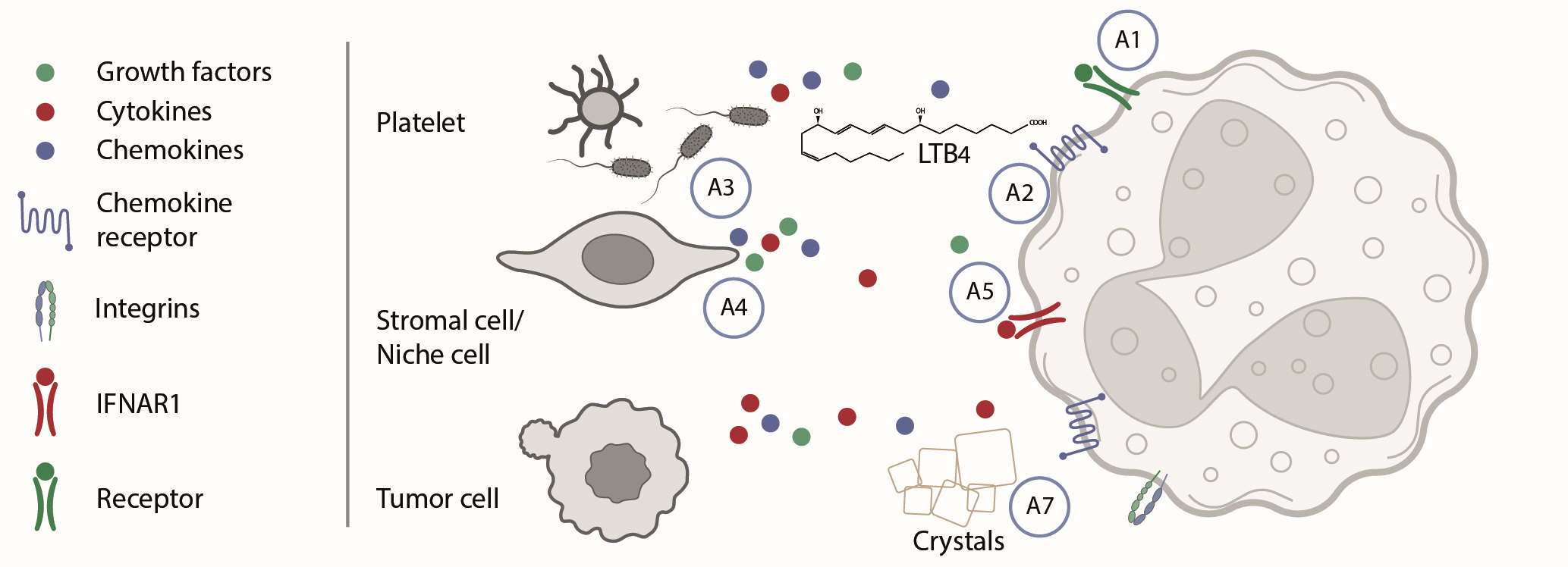
Neutrophils sense and respond to various types of signals generated within tissues. Such signalling occurs during steady state or inflammation and affects production as well as function of peripheral neutrophils. As an example, neutrophils were shown to exhibit an exceptional plasticity within tissues during steady state, thus enabling them to acquire different functional states depending on tissue cues. However, the importance of the microenvironment can be extended to disease conditions such as tumour microenvironments. Recent work has shown, that neutrophils at different maturation stages infiltrate tumours and locally converge to a distinct, terminally differentiated state supporting the dominant importance of local cues. Thus, in research area A, six projects study the importance of extracellular signals derived from the environment for neutrophil production and function and link these changes closely to relevant pathologies.